

Emotional Tech Support: Introducing Aura Check

This past summer, I did what few men have dared: the reverse Brooklyn commute. The L to the G, from Bushwick to Carroll Gardens. My destination was Fictive Kin, a design studio where I joined AI Residency as an entrepreneur in residence.
I did some of my best thinking on the G, carrying a slippery question each morning: how could ai be helpful, truly helpful, in a way that would improve my day to day well-being?
Bad sleep, a breakup, and an Oura ring
Earlier this spring, I went through a breakup and impulse-bought an Oura ring. It was retail therapy meets post-breakup glow-up, but I hoped it would help me manage stress by uncovering patterns in my sleep and exercise. Instead, I was met with an overload of dashboards and a sleep score that made me feel like I was failing the midterm of my life.
I went a bit rogue and took things into my own hands. Out of curiosity, I began feeding pieces of my biometrics (sleep, hrv, steps, etc.) into ChatGPT. To my surprise, it helped me connect dots between my sleep, attachment patterns, and even nervous system regulation. To really expose myself online: it basically told me my insomnia showed up whenever my anxious-leaning attachment side was activated, then handed me some nervous system exercises to try. I took that to therapy, where I could unpack it with an actual human.
AI wasn’t fixing my on-again-off-again insomnia, but it was offering a mirror. Not a therapist (I am a very big advocate for the human aspect of therapy). Not a friend either. Just a reframing device — a way to connect and notice the patterns and flows that govern my daily life in real time and with fresh eyes. A meta analysis on my own personal operating system. And not necessarily to be optimized, just to be understood.
The mind-body connection
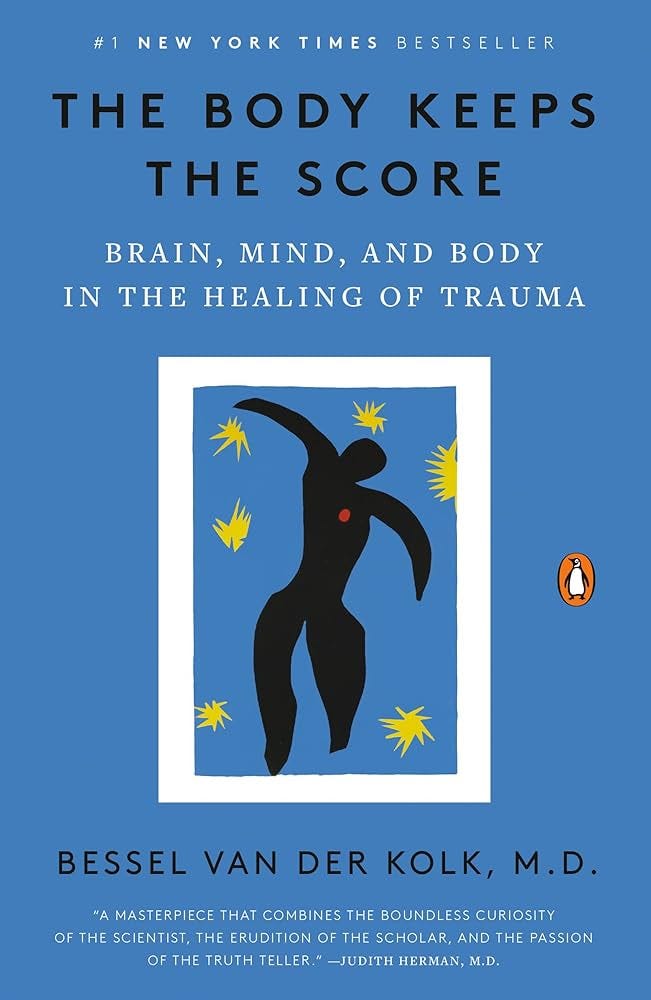
If 2016–2020 was all about Barry’s, biohacking, Peloton, and wearables with apps that feel like Yahoo Finance, today feels softer. Sound baths have gone mainstream. Saunas and meditation centers (Bathhouse, WSA/SAA, Othership) are acceptable date spots. Maybe it’s that our nerves are still fried post-Covid, or the influence of books like The Body Keeps the Score, but the wellness-vibe has shifted—toward the somatic and honoring the mind-body connection.
Digital wellness tools, though, haven’t kept up. On one side are apps for wearables like Oura that track sleep and steps but as Emily Sundberg calls them are “cops on your finger.”
On the other side are spiritual tools like Co–Star, or behavioral health tools like Calm, that make you feel good but lack context on your life patterns and health data. What’s missing is the middle: a tool that helps you reframe your state through the body—reminding you, before sending that text, that you’re underslept and overexposed to screens. Not therapy, not a friend, but like a message from your best future self.
Introducing Aura Check
Remember when you could just call a number on the TV screen? 855-AURA-CHECK is built in that spirit—a hotline you can text at 646-760-5204 for an “aura-esque” reading, crash-out guidance, or just a playful check-in. If you’re feeling 🌀spiraly 🌀, it offers quick reframes, a breathing exercise or two, and perspectives from cultish books—Attached for decoding love, The Artist’s Way for unblocking creativity.
I’ve been using it for a while now, and have found that it takes the edge off in a bite-sized way. Like scrolling your favorite meme account in a bathroom stall at work.
It’s a quick experiment and a small statement: wellness doesn’t have to be solemn. It can be light, funny, absurd, and a little messy.

Why a hotline?
Anyone who’s spent two minutes on tech Twitter knows the mantra: distribution is broken. Very few people outside (and maybe even inside of) tech circles are downloading new apps. So instead of an app, I am starting with an even lower friction format, a phone number. I know this isn’t scalable. That’s the point.
AI & mental health
Wellness with personality has promise, but the risks are stark. Recent suicides tied to AI make that clear. History shows capitalism and mental health rarely align, and even Replika’s founder admitted to a class of Harvard Business School students they had to dial down addictiveness. For me, AI should support, not replace. More on this soon.
Looking forward
The hotline is an MVP of an MVP. The next iteration will blend your biometrics, daily rhythms—even screen time—and reflect it back with personality. In the meantime, text Aura Check at 646-760-5204 for light emotional tech support (not actual crisis). Please let me know what you think by texting “Feedback” to the same number.
love that you referenced "the body keeps the score" congrats on a brilliant concept and on your soft launch.